


Building a cold room is an important investment for businesses involved in food processing, catering, supermarkets, pharmaceuticals, and cold chain logistics. One of the first questions buyers ask is: How much does it cost to build a cold room?
The cost depends on several factors, including the storage temperature, room dimensions, insulation materials, refrigeration equipment, and installation requirements. In this guide, we will explain the estimated cost of different types of cold rooms per cubic meter, compare their configurations, and discuss the key factors that affect the total project budget.

1. What Is a Cold Room?
A cold room is an insulated storage space equipped with a refrigeration system to maintain a specific temperature for preserving products. Depending on the application, cold rooms can be designed for different temperature ranges:
Fresh Cold Storage: Usually operates between 0°C and 5°C.
Frozen Cold Storage: Typically operates at around -18°C.
Quick-Freezing Cold Storage: Usually operates between -30°C and -35°C.
Special-Purpose Cold Storage: Designed for pharmaceutical products, controlled atmosphere storage, and other specialized applications.
A complete cold room system generally consists of insulated sandwich panels, a refrigeration condensing unit, an evaporator, refrigeration piping, an electrical control system, and cold room doors.


2. Cold Room Cost per Cubic Meter
The estimated cost of building a cold room varies according to its temperature requirements, dimensions, insulation specifications, and refrigeration configuration. Below are the estimated price ranges for different types of cold storage facilities.
2.1 Fresh Cold Storage (0°C to 5°C)
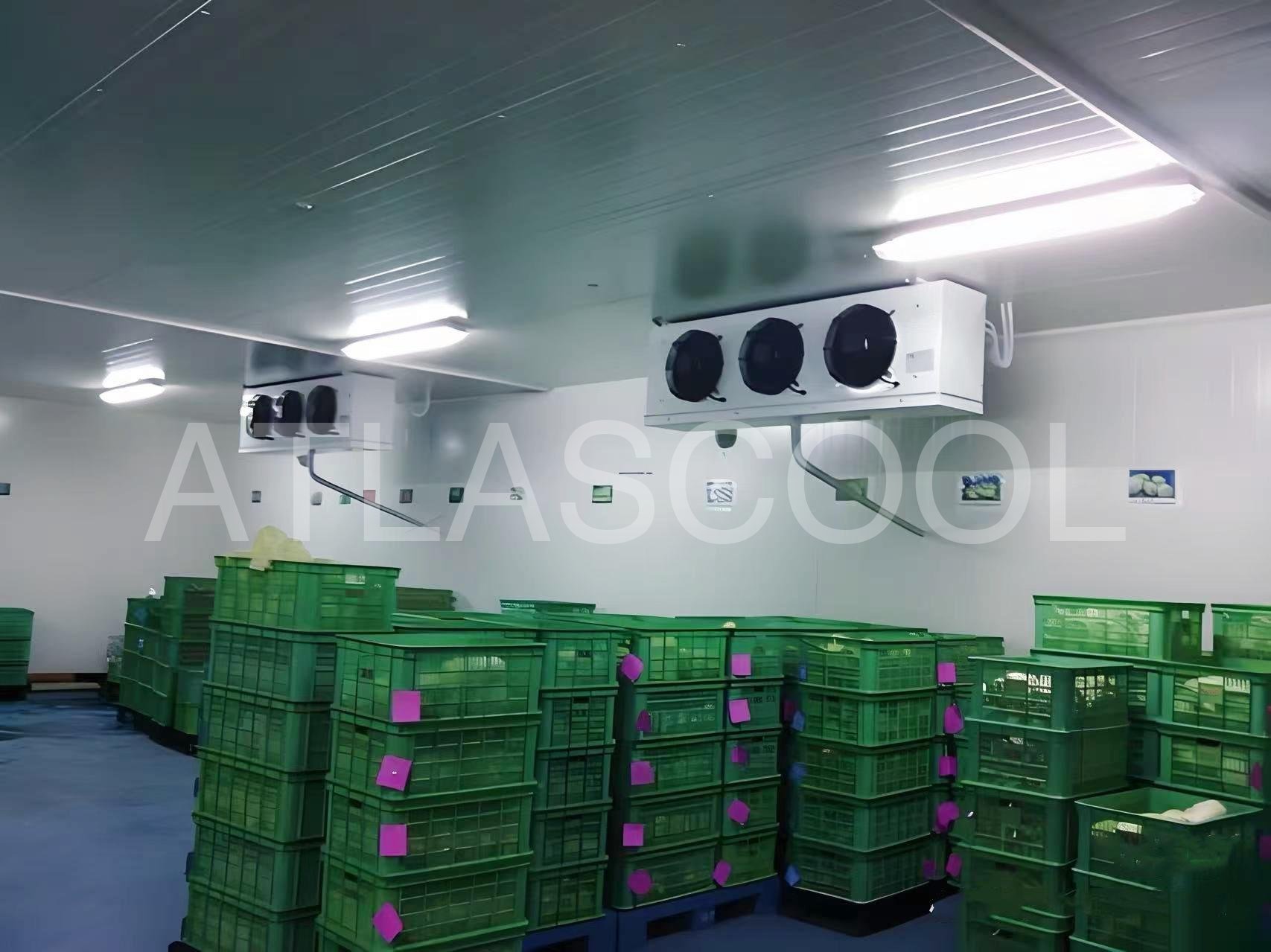
Suitable for storing fruits, vegetables, dairy products, and other fresh food.
Small and Medium-Sized Cold Storage: $120–$200 per m³
Typically equipped with standard 100mm-thick polyurethane (PU) insulation panels and refrigeration systems designed for fresh food storage.
2.2 Frozen Cold Storage (-18°C)
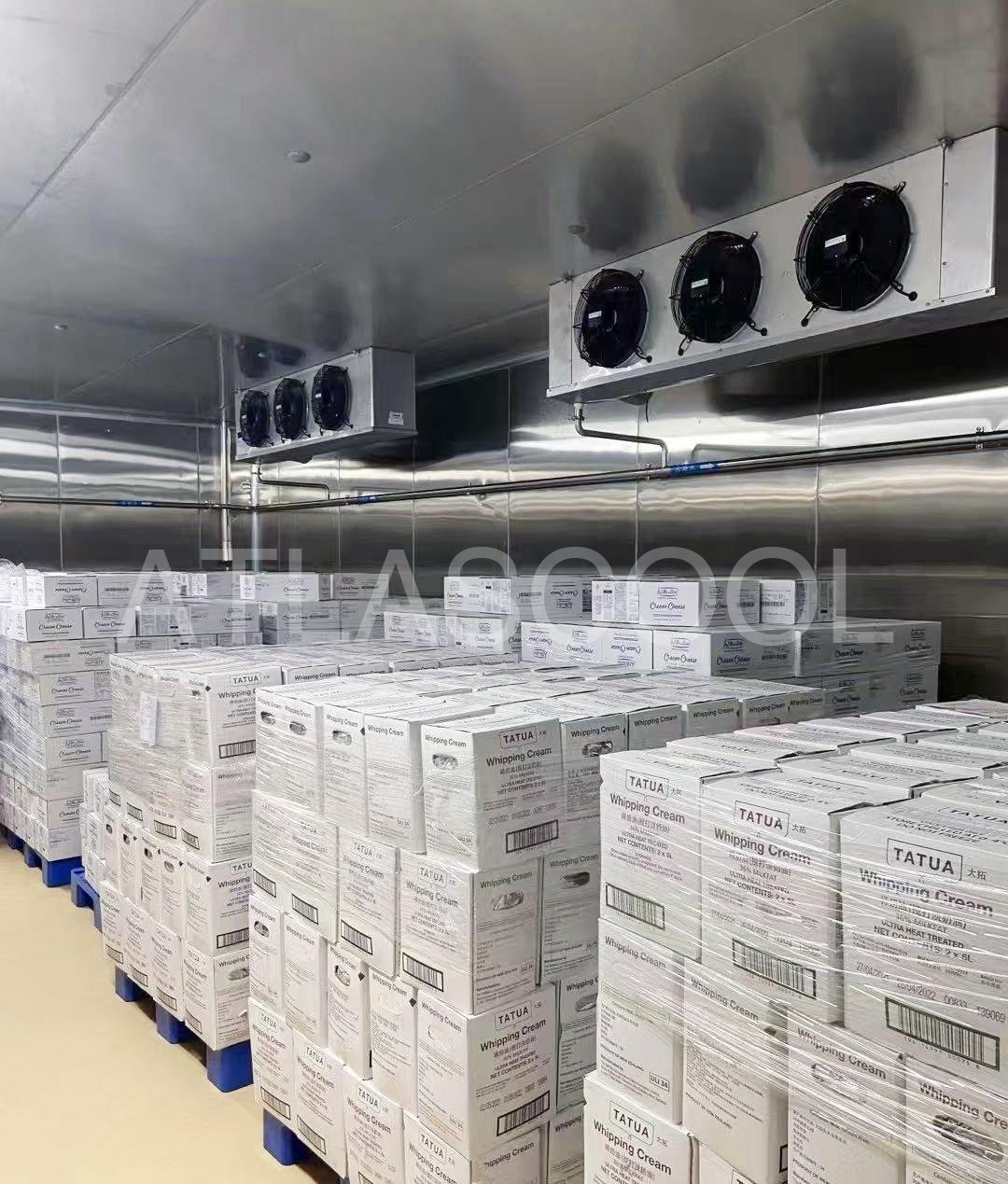
Suitable for storing frozen meat, seafood, and other frozen products.
Small and Medium-Sized Cold Storage: $150–$250 per m³
This type of cold storage typically requires 150mm-thick insulation panels, appropriate underfloor frost protection, and higher-capacity refrigeration equipment, resulting in higher overall costs.
2.3 Quick-Freezing Cold Storage (-30°C to -35°C)
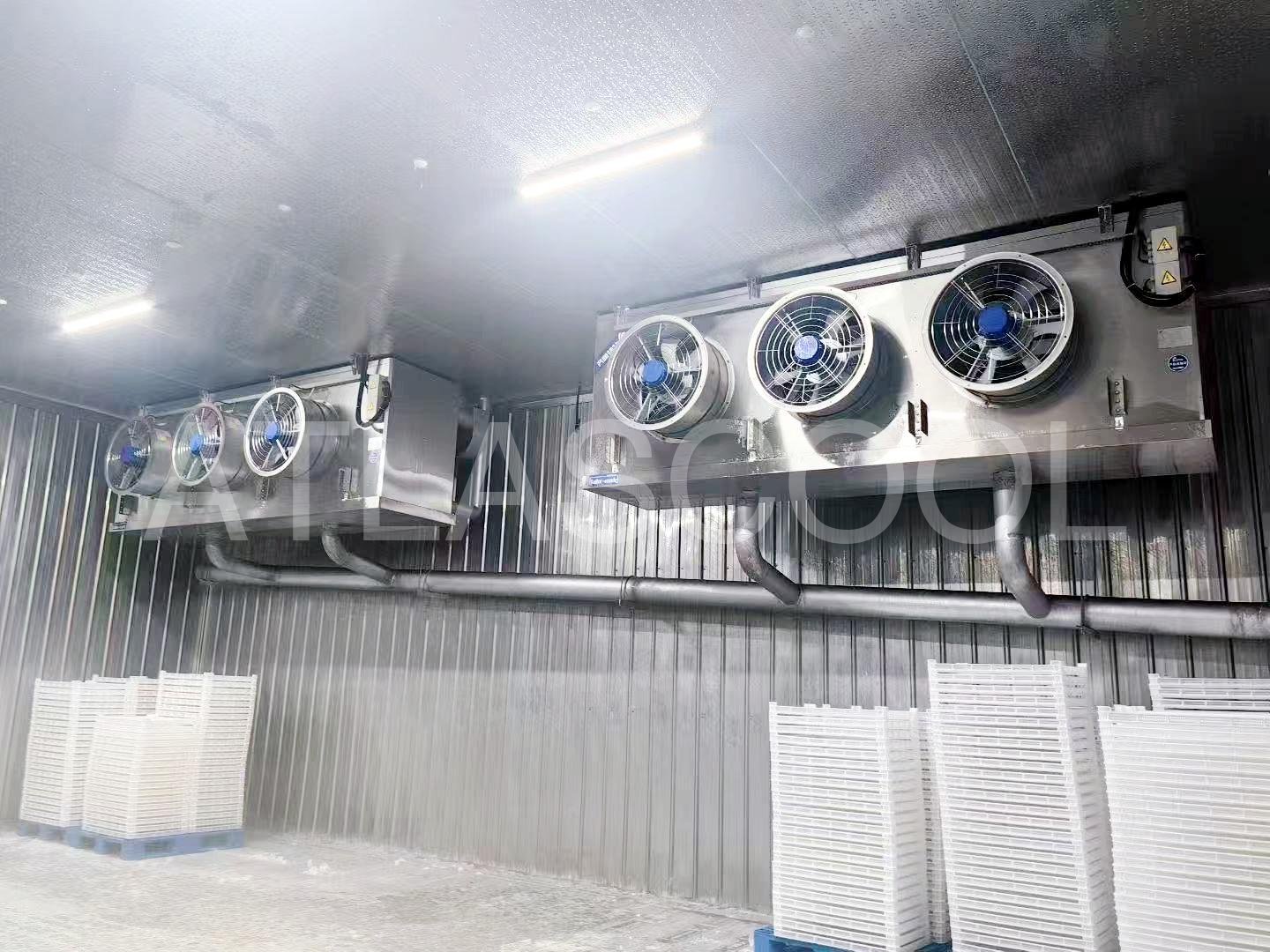
Designed for rapidly freezing food products while maintaining product quality.
Estimated Cost: $300–$450+ per m³
Quick-freezing facilities generally require high-efficiency air coolers or specialized freezing equipment, automatic defrosting systems, and heavy-duty refrigeration configurations.
2.4 Special-Purpose Cold Storage
Specialized cold storage facilities require additional equipment and customized configurations to meet specific operating requirements.
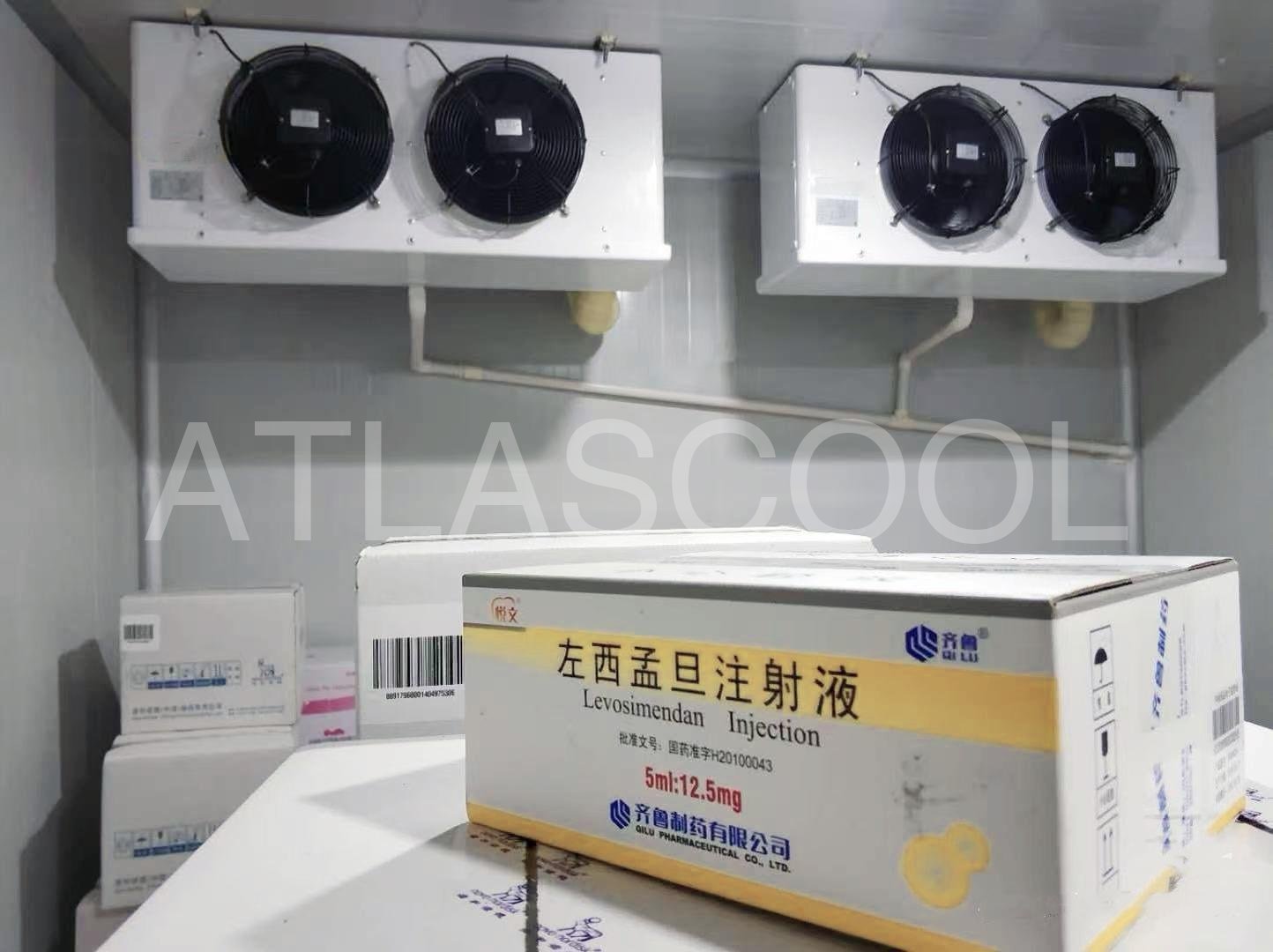
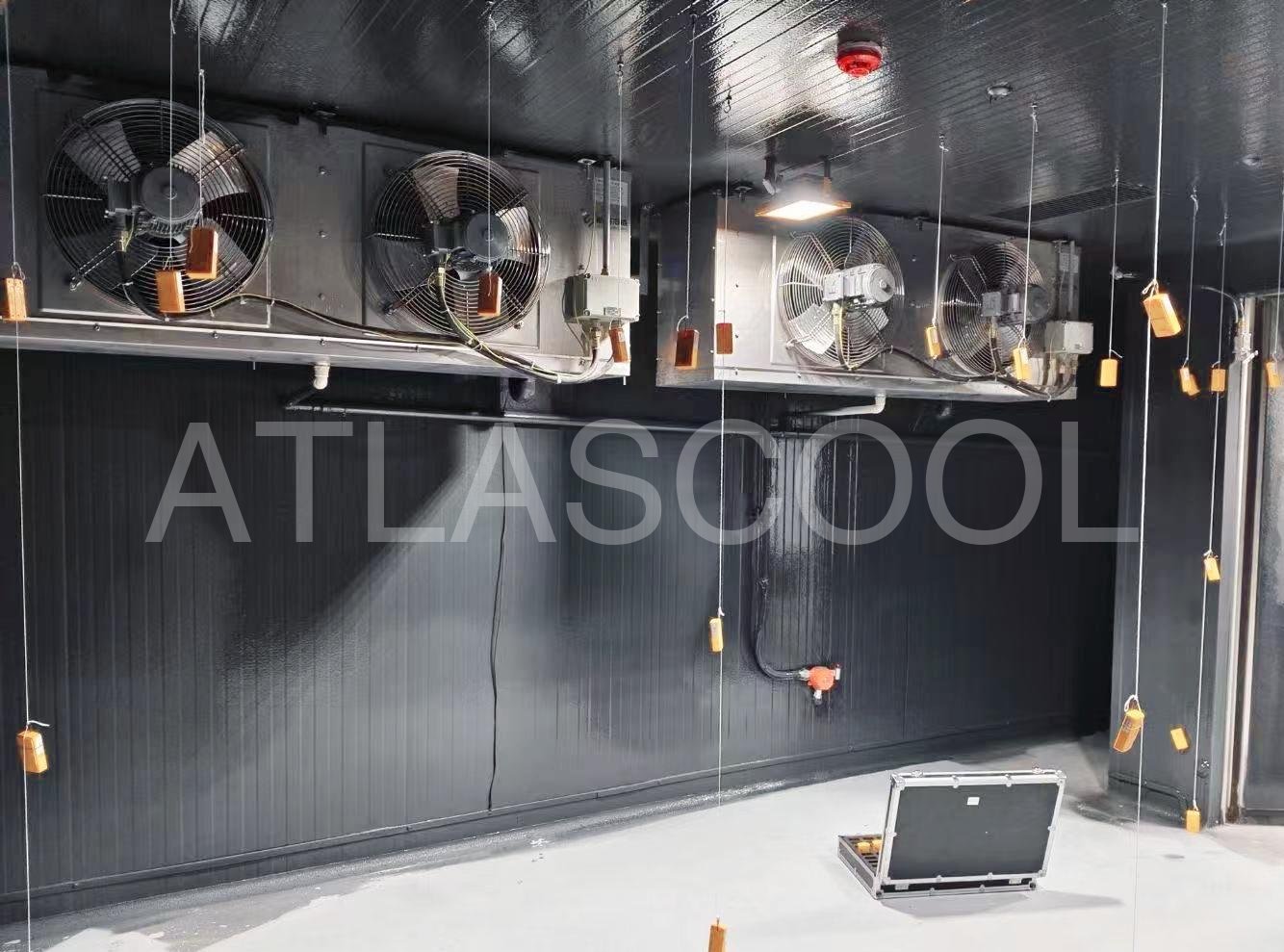
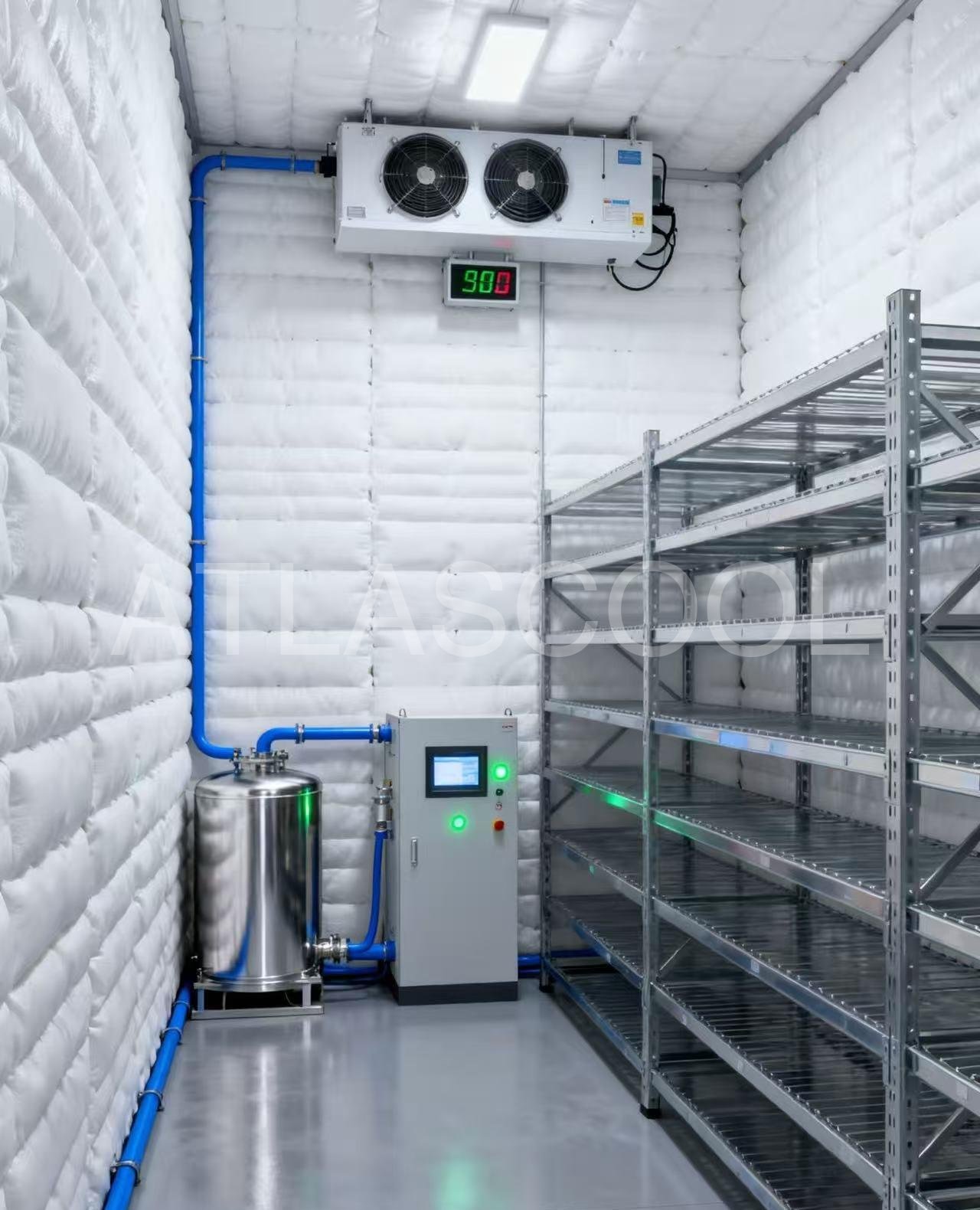
Pharmaceutical Cold Storage (2°C to 8°C): $180–$250 per m³ — typically equipped with temperature monitoring, alarm systems, and backup power solutions.
Explosion-Proof Cold Storage: $650+ per m³ — requires specialized explosion-proof electrical components designed according to applicable hazardous-area classification.
Controlled Atmosphere Cold Storage: $250–$450 per m³ — requires additional gas-control equipment, airtight insulation structures, and systems for monitoring and regulating oxygen and carbon dioxide levels.
Important Note: The above prices are indicative estimates based on cold room volume (m³). Actual costs may vary depending on room dimensions, temperature requirements, insulation specifications, refrigeration equipment, installation conditions, and project configuration. Please contact us for a detailed quotation based on your project requirements.
3. What Factors Affect Cold Room Construction Costs?
The cost of a cold room is not determined by its volume alone. Several technical and project-related factors can significantly influence the final price.
3.1 Cold Room Size and Height
The dimensions of a cold room directly affect the quantity of insulation panels, refrigeration capacity, and installation materials required. Larger projects may benefit from economies of scale because equipment procurement and installation costs can be distributed across a greater storage volume. However, the required refrigeration capacity must always be calculated according to the actual application and operating conditions.
3.2 Required Storage Temperature
Different temperature requirements need different insulation specifications and refrigeration configurations. Fresh storage at 0°C to 5°C generally requires less refrigeration capacity. Frozen storage at -18°C requires thicker insulation and more powerful refrigeration equipment. Quick-freezing applications at -30°C to -35°C require specialized equipment and more demanding system configurations. Lower operating temperatures generally increase the initial investment and energy requirements.
3.3 Insulation Panel Thickness and Material
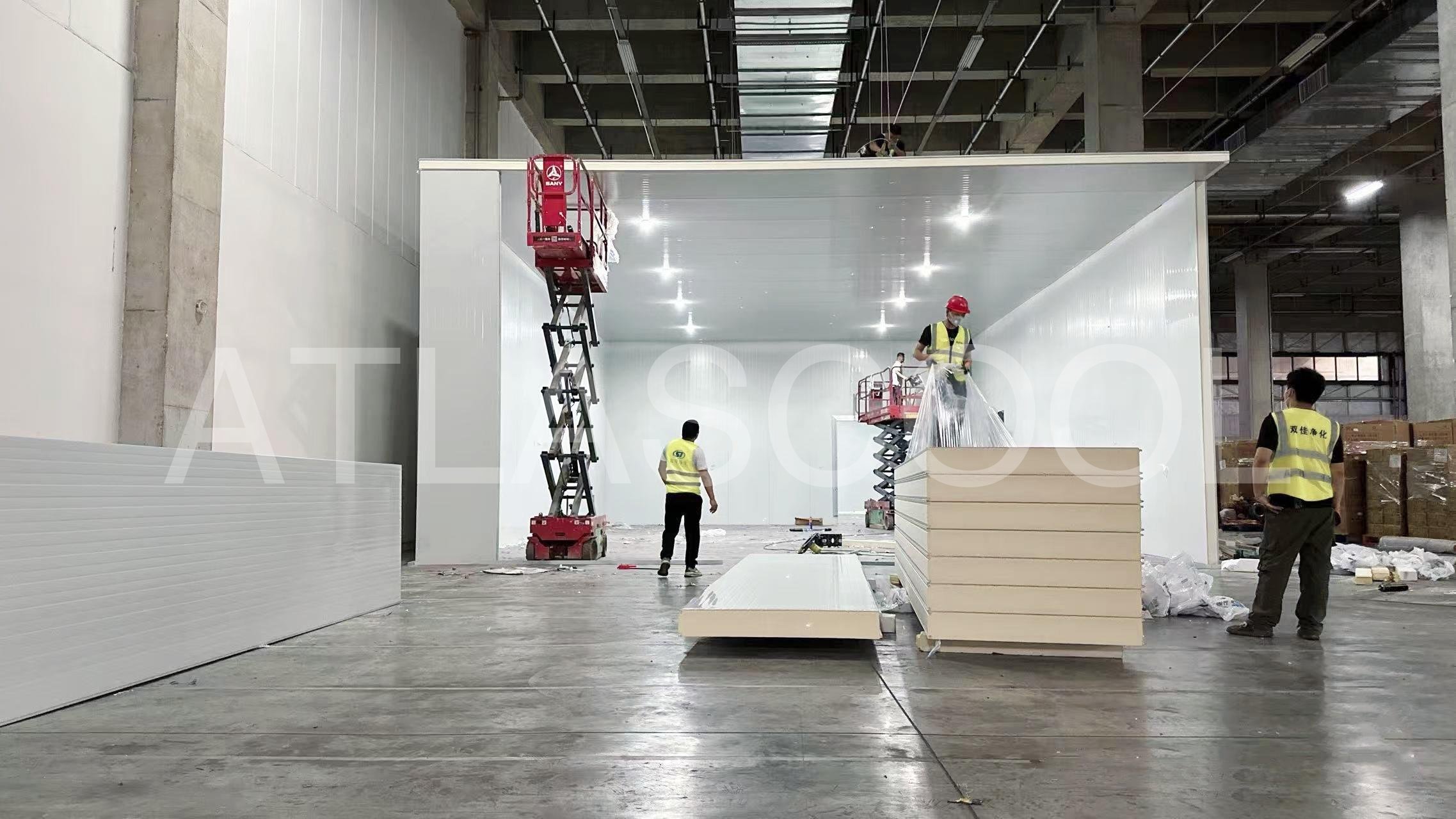
Polyurethane (PU) sandwich panels are widely used in cold room construction because of their excellent thermal insulation performance. Common panel thicknesses include:
50mm: Suitable for certain chilled applications, depending on design conditions.
100mm: Commonly used for fresh cold storage.
150mm: Commonly used for frozen cold storage.
200mm: May be required for lower-temperature applications or projects with more demanding insulation requirements.
3.4 Refrigeration Equipment and Compressor Brand
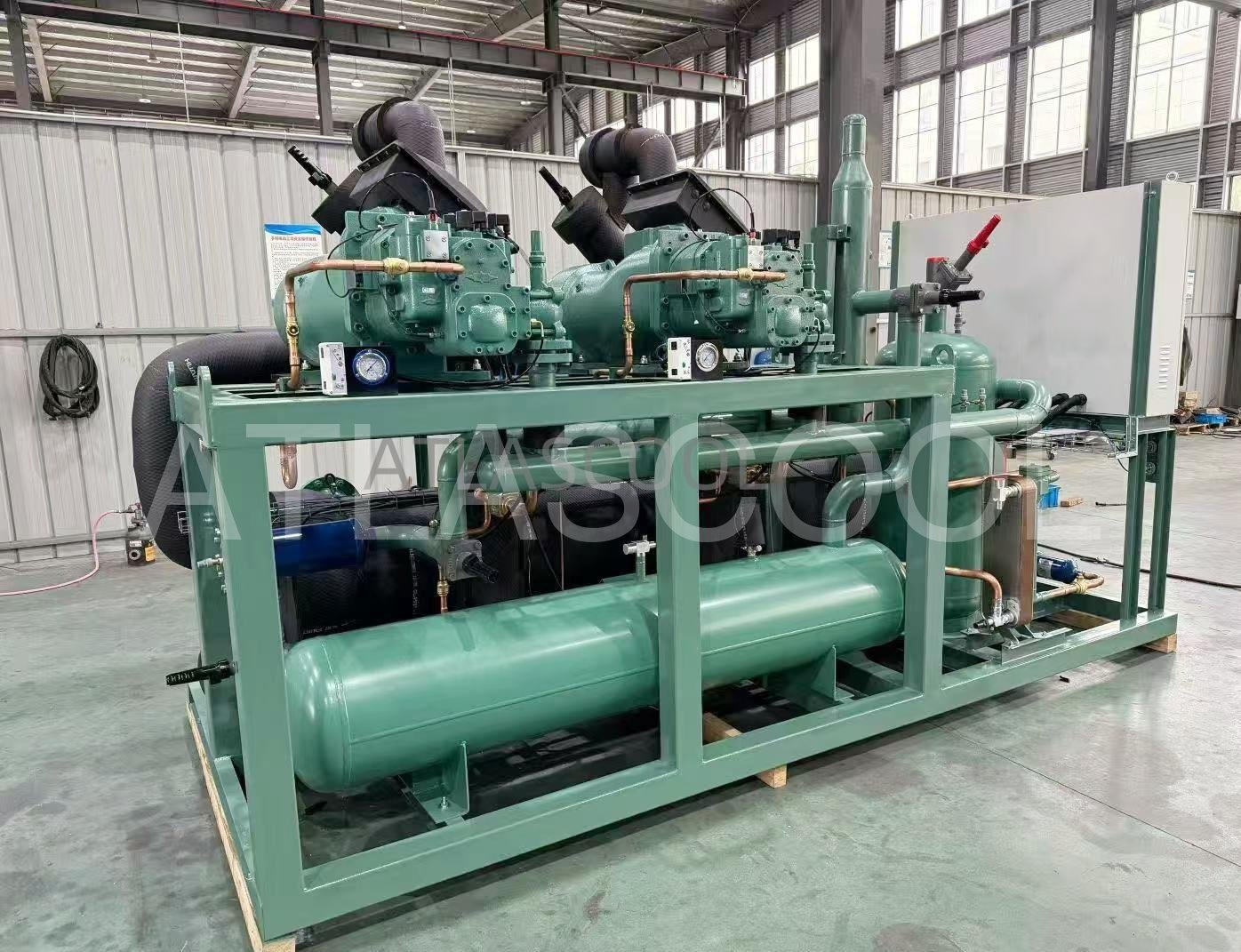
The refrigeration system is one of the most important parts of a cold room project. Its cost depends on the cooling capacity, system design, equipment configuration, and compressor brand. Well-known compressor brands such as Bitzer and Copeland are commonly selected for commercial and industrial refrigeration applications.
3.5 Cold Room Doors and Electrical Control Systems
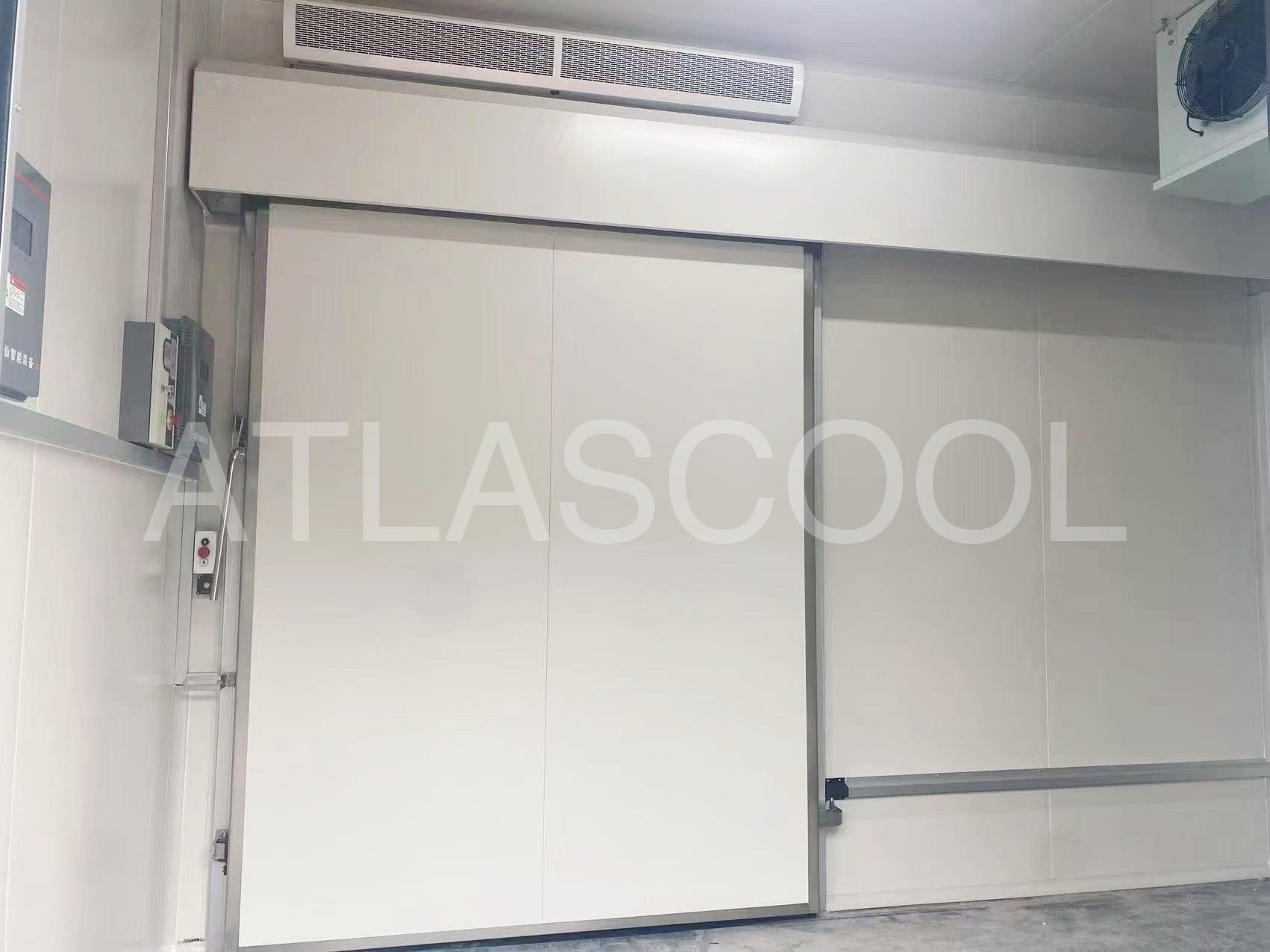
Cold room doors, electrical control panels, lighting, temperature sensors, and safety accessories also contribute to the total project cost. Depending on the application, additional configurations may include sliding or hinged cold room doors, heated door frames for low-temperature applications, pressure relief ports, temperature and humidity monitoring, automatic alarm systems, and remote monitoring and control.
3.6 Installation Conditions and Site Requirements
The construction site can also affect the overall investment. Additional costs may arise from floor insulation and underfloor frost protection, waterproofing and drainage systems, foundation reinforcement, special lifting and installation requirements, fire protection and other local compliance requirements, transportation and on-site labor. For projects involving frozen or quick-freezing storage, proper floor design and frost protection are particularly important.
4. What Is Included in the Cost of a Cold Room?
A complete cold room project generally includes several major components. The following is an illustrative breakdown of the overall project cost:
Insulated panels: Around 50%
Refrigeration system (condensing units, evaporators, piping, and refrigerant): Around 35%
Electrical controls, doors, installation labor, and accessories: Around 15%
Note: These percentages are for general reference only. The actual cost distribution varies depending on the project design, equipment selection, local labor costs, and installation requirements.
5. How to Reduce Cold Room Construction Costs
Reducing the initial investment does not mean compromising insulation quality or refrigeration performance. Here are several practical ways to control your project budget:
Choose the Right Cold Room Size: Determine your actual storage requirements before construction. Avoid building an oversized cold room.
Select Suitable Insulation Panels: Choose the appropriate panel thickness according to the required storage temperature and local climate.
Choose an Efficient Refrigeration System: The refrigeration system should be selected according to the actual cooling load rather than simply choosing the largest available unit.
Purchase a Complete Cold Room Solution: Purchasing insulated panels, refrigeration equipment, doors, and electrical control systems from one supplier can simplify project coordination and reduce compatibility issues.
6. What Information Is Needed for an Accurate Cold Room Quotation?
To calculate the cost of your cold room project accurately, we recommend preparing the following information:
Cold Room Dimensions: Length × Width × Height (meters).
Required Storage Temperature: For example, 0°C to 5°C, -18°C, or -35°C.
Application: Fruits, vegetables, meat, seafood, pharmaceuticals, or other products.
Daily Product Throughput: How much product will enter the cold room each day?
Product Entry Temperature: What is the temperature of the products before entering the cold room?
Target Cooling or Freezing Time: How quickly do you need to cool or freeze the products?
Installation Location: Country or city, so we can consider the local ambient temperature and power supply.
Special Requirements: Such as controlled atmosphere, explosion-proof equipment, temperature monitoring, or backup power.
7. Get a Customized Cold Room Solution from Atlas Refrigeration
At Atlas Refrigeration, we provide complete cold storage solutions for commercial and industrial applications. Our product range includes PU insulated cold room panels, cold room doors, refrigeration condensing units, air-cooled and water-cooled condensers, cold room evaporators, refrigeration electrical control systems, and complete cold room equipment and accessories.
Whether you are planning a small walk-in cold room or a large industrial cold storage facility, we can help you select the right insulation materials and refrigeration equipment according to your project requirements.


Contact Atlas Refrigeration today to get a customized cold room solution and quotation. Please send us your cold room dimensions, required storage temperature, and application details. Our team will help you evaluate the project and recommend a suitable configuration.
8. Frequently Asked Questions About Cold Room Costs
Q1: How much does a cold room cost per cubic meter?
The estimated cost depends on the storage temperature and system configuration. As a general reference: fresh cold storage (0°C to 5°C) is $120–$200/m³; frozen cold storage (-18°C) is $150–$250/m³; quick-freezing cold storage (-30°C to -35°C) is $300–$450+/m³. These are indicative prices. The final quotation depends on the project specifications and equipment requirements.
Q2: How do I calculate the volume of a cold room?
The volume of a cold room is calculated using the following formula: Volume (m³) = Length (m) × Width (m) × Height (m). For example, a cold room measuring 5m long, 4m wide, and 3m high has a volume of 5 × 4 × 3 = 60m³. The actual quotation should clarify whether the calculation is based on internal or external dimensions.
Q3: What is the difference between fresh and frozen cold storage?
Fresh cold storage typically operates between 0°C and 5°C and is used for fruits, vegetables, dairy products, and other fresh food. Frozen cold storage generally operates at around -18°C and is designed for frozen meat, seafood, and other frozen products. Frozen storage normally requires thicker insulation panels and a refrigeration system capable of maintaining lower temperatures.
Q4: What thickness of PU panels is suitable for a cold room?
The appropriate panel thickness depends on the required storage temperature and project conditions. As a general guideline: 100mm panels are commonly used for fresh cold storage, 150mm panels are commonly used for frozen cold storage, and 200mm panels may be required for lower-temperature applications. The final specification should be confirmed through engineering calculations.
Q5: How much electricity does a cold room consume?
Electricity consumption depends on the cold room volume, storage temperature, product loading, insulation performance, door-opening frequency, ambient temperature, and refrigeration system efficiency. A larger cold room does not necessarily consume electricity in direct proportion to its volume. For a more accurate estimate, the refrigeration load and expected operating hours should be evaluated.
Q6: How long does it take to install a cold room?
Installation time depends on the cold room size, project complexity, site conditions, and equipment configuration. A small walk-in cold room may take only a few days to install, while a large industrial cold storage project may require several weeks or longer.
Q7: What equipment is needed for a complete cold room?
A standard cold room generally requires PU insulated sandwich panels, a refrigeration condensing unit, an evaporator (air cooler), refrigeration copper piping and accessories, an electrical control system, and cold room doors and installation accessories. Additional equipment may be required for specialized applications.
Q8: Can Atlas Refrigeration provide a customized cold room quotation?
Yes. Atlas Refrigeration provides customized cold room solutions based on your storage requirements, room dimensions, operating temperature, and project conditions. Simply send us your project details, and our team will help you select suitable equipment and prepare a quotation.
